Special Feature 2

While demand for marine products continues to grow globally, rising sea temperatures due to global warming, changes in the marine environment, and increasing instability in amount of resources are all issues. Furthermore, the environment surrounding the marine products industry is becoming even more challenging year by year, due to the tightening of fishing regulations in various countries and other factors. These challenges are difficult to address with traditional fishing methods alone; not to mention, there is a greater need than ever for both sustainable resource use and a stable supply.
To address these challenges, the Group will harness its long-standing expertise in aquaculture, and continue to strive to build a stable supply system for marine products while flexibly responding to changing marine environments and societal demands.
Business operations as a leader in aquaculture
Business operations as a leader in aquaculture
Toward in-house development of land-based aquaculture systems
As part of its initiatives to promote the sustainable use and stable supply of fishery resources, Nichimo has launched a demonstration project in Kuji City, Iwate Prefecture, with the goal of producing an in-house recirculating aquaculture system (RAS). RAS is a method of farming marine products on land while circulating and purifying the water. A major feature of RAS is that it is less susceptible to the effects of external environmental factors such as fluctuations in seawater temperature, red tides, and heavy weather. This aquaculture technology, which efficiently utilizes limited water resources while simultaneously achieving stable production throughout the year and reducing environmental impacts, has been garnering attention both in Japan and around the world in recent years.
In this demonstration testing, water was injected into two tanks equivalent to 30 tons and trial operation began in late March 2026, and stable operation of water quality and circulation functions was confirmed in May 2026. Subsequently, we introduced salmon trout, and are currently conducting aquaculture tests in parallel for each growth phase, from juvenile to adult fish.
This initiative is based on our track record in marine aquaculture cultivated over many years in Kuji City. We are making effective use of currently unused freezing plant facilities, and by utilizing existing infrastructure, we have also achieved a reduction in environmental impacts during construction. In the future, we aim to improve the efficiency of the entire aquaculture process by establishing a system that allows for the rapid transfer of seedlings (fry) grown on land to offshore aquaculture cages, thereby reducing stress and mortality risks during transportation. In recent years, seedling production has been declining due to rising water temperatures and climate change, making the establishment of a stable supply system a challenge for the entire industry. We aim to establish an integrated production system that balances quality and supply capacity.

RAS facility

Stocking a salmon trout pond
Furthermore, one of the objectives of this demonstration test is to establish our own proprietary RAS equipment. Currently, most RAS facilities in Japan rely on overseas-made equipment, which presents challenges such as high installation costs, the time required for parts procurement and technical support during maintenance. To address this, in collaboration with our Machinery Business segment, we aim to develop a domestically produced RAS that is low-cost and highly maintainable by utilizing advanced wastewater treatment technologies and equipment know-how from across Japan. This will make it easier for aquaculture businesses to adopt RAS and contribute to the development of the entire aquaculture industry both domestically and internationally.
Going forward, based on the operational data and technical insights gained from this demonstration test, we will proceed with the standardization and packaging of a proprietary RAS and consider selling it externally. Land-based aquaculture is positioned as one of the important growth sectors in the Japanese government’s growth strategy. As a result, further market expansion is expected.
For the time being, we will focus on selling the fish we produce through local distribution channels. In the future, we will work to expand our sales channels by considering exports to Asian markets, where demand is expected to grow, in addition to the domestic market.
Regional revitalization through branded fish aquaculture
Regional revitalization through branded fish aquaculture
Imizu Sakuramasu
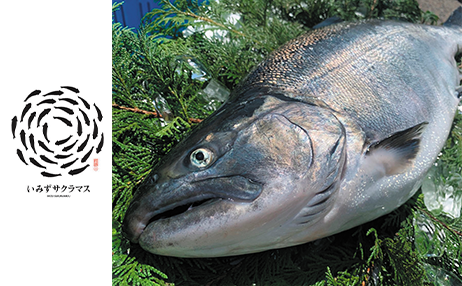
Brand logo, Imizu Sakuramasu
In recent years, the catch of domestic trout has been on a downward trend due to factors such as changes in the marine environment, raising concerns about the impact on local economies and food culture. In response to these challenges, the Group is working to realize a sustainable marine products industry based on its aquaculture technology and seedling supply capabilities cultivated over the past four decades.
In October 2025, we signed a tripartite agreement with Imizu City in Toyama Prefecture and the Horioka Aquaculture Fisheries Cooperative for the promotion of offshore aquaculture of Imizu Sakuramasu and regional revitalization. This agreement aims to establish a stable supply system for Imizu Sakuramasu, a local branded fish, and to enhance its brand value, as well as to revitalize the region through public-private partnerships that stimulate local industries. Nichimo has been involved in the production of this fish through the supply of seedlings, and this agreement brings an opportunity to further develop our initiatives to expand production and contribute to regional development.
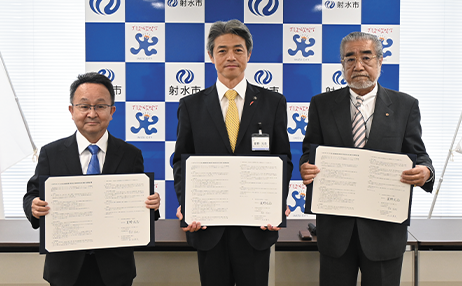
Signing ceremony
In addition, this fish is a regional branded fish characterized by its high-quality fat and vibrant, tender flesh. It is served in restaurants in Imizu City, as well as incorporated into food education programs at local elementary schools, thus becoming widely known in the community. Furthermore, the promotion of this project is expected to contribute to multifaceted regional revitalization, including job creation through the expansion of aquaculture, increased value as a tourism resource through greater brand power, and the revitalization of related industries.
In FY2026, we have started farming the fish using three offshore fish cages, and plan to gradually expand the business based on the aquaculture environment, demand trends, and production status. In the future, we will work on developing our own feed products and establishing a seedling production system within the prefecture to improve quality and strengthen differentiation.
Against the backdrop of a declining supply of domestically produced trout, demand for high-quality domestically farmed fish is increasing. Leveraging the rarity and high quality of Imizu Sakuramasu, we will contribute to building a sustainable aquaculture industry that grows together with the region and to creating value for local communities.